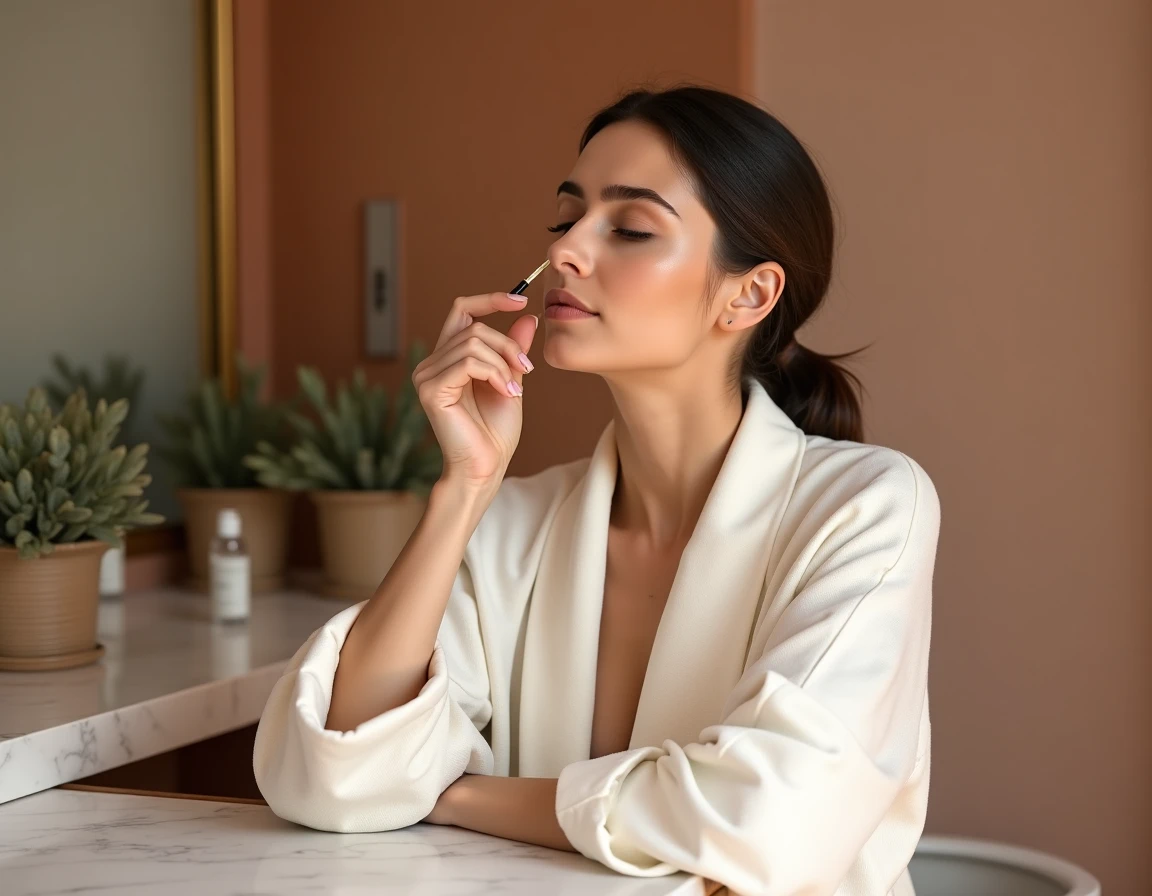
The European cosmetic market is undergoing a regulatory transformation that is altering the very composition of products available on the shelves. With new restrictions on microplastics, stricter regulations on retinol, and expanded labeling of fragrance allergens, daily beauty habits are directly affected. Understanding these changes allows for more informed choices in skincare and makeup.
European Cosmetic Regulation: What Changes for Your Beauty Products
Several recent European regulations are reshaping the composition of cosmetics sold in France. The delegated regulation (EU) 2023/1545 mandates the individual declaration of a greater number of fragrance allergens for products placed on the market from July 31, 2026. Products already on the market benefit from a sell-through period until July 31, 2028.
This measure directly impacts the choice of skincare and fragrances for sensitive skin. Reading the INCI list on the packaging will become more informative, as substances previously grouped under generic terms will now be listed individually.
At the same time, regulation (EU) 2023/2055 governs microplastics in cosmetics according to a phased timeline. Some rinse-off products will be affected starting in October 2027, while several makeup items, lip products, and nail products have deadlines extending up to 2035. It is therefore not enough to look for a “microplastic-free” label: the exact category of the product determines the applicable timeline. A foundation and a shower gel are not subject to the same deadlines.
Those who wish to learn everything about My Beauty Secrets will find additional guidance to navigate these changes.

Retinol and Vitamin A: New Concentration Limits in Facial Care
The regulation (EU) 2024/996, published on April 3, 2024, regulates the concentrations of vitamin A in cosmetics. It requires a warning label, with phased application periods between November 2025 and May 2027.
Retinol remains one of the most sought-after ingredients in anti-aging routines. Field reports vary on this point: some high-concentration formulations caused irritation, which contributed to this regulatory decision. For consumers, this means that serums and creams containing retinol sold in France will gradually evolve in their dosage.
What This Means for Your Skincare Routine
Brands reformulating their products do not always communicate about concentration adjustments. Checking the position of retinol in the INCI list gives a relative indication of its proportion. The higher it appears, the more significant its concentration.
Sensitive or reactive skin types should prioritize alternatives like bakuchiol, a plant-based ingredient that is not subject to the same restrictions. The available data do not allow for a conclusion of strictly equivalent efficacy, but several dermatological lines now incorporate it into their facial care.
Makeup and Microplastics: Analyzing Labels According to Product Category
The most frequent confusion concerns the distinction between rinse-off products and leave-on products. A mascara, lipstick, or face powder does not fall under the same regulatory timeline as a cleanser or scrub.
- Scrubs and cleansers containing microbeads are among the first products affected by restrictions on microplastics, with short-term deadlines.
- Foundations, powders, and blushes have longer deadlines, meaning that formulations still containing synthetic polymers will remain on sale for several years.
- Nail products (polish, base coat) are among the categories benefiting from the most extended deadlines, potentially until 2035.
Checking the regulatory category of the product is more reliable than a simple marketing logo. The terms “clean beauty” or “microplastic-free” are not legally regulated in the same way as the obligations of the European regulation.

Hydration and Daily Facial Care: Choosing Ingredients Knowledgeably
Hyaluronic acid and panthenol (provitamin B5) remain pillars of skin hydration. Their effectiveness in maintaining skin elasticity and supporting the skin barrier is widely agreed upon in dermatology.
However, the multiplication of active ingredients in a single product does not guarantee better results. A hydrating product with two or three well-dosed actives is sufficient for most skin types. Layering a serum, essence, cream, and oil is more a marketing trend than a physiological necessity.
Adapting Your Beauty Routine According to Your Skin
Oily skin does not require the same texture as dehydrated skin. Gel-cream formulations are better suited for combination to oily skin, while richer textures protect dry skin exposed to cold or wind.
- Cleansing the face morning and night remains the foundation of an effective routine, regardless of skin type.
- Applying a hydrating product on slightly damp skin improves the absorption of active ingredients.
- Protecting the skin from the sun daily limits signs of aging far more effectively than most anti-aging serums.
Daily sun protection remains the most documented anti-aging gesture in dermatology. Makeup and skincare trends come and go, but this fact remains constant.
The ongoing European regulatory changes will gradually alter the composition of beauty products available in France. Rather than merely enduring these changes, taking an interest in them allows for an understanding of why a familiar product is changing its formula and enables the selection of skincare based on more solid criteria than an attractive package.