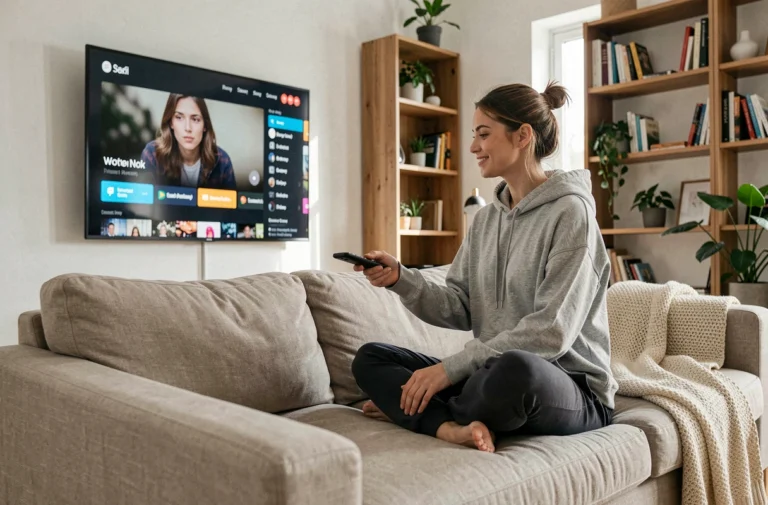
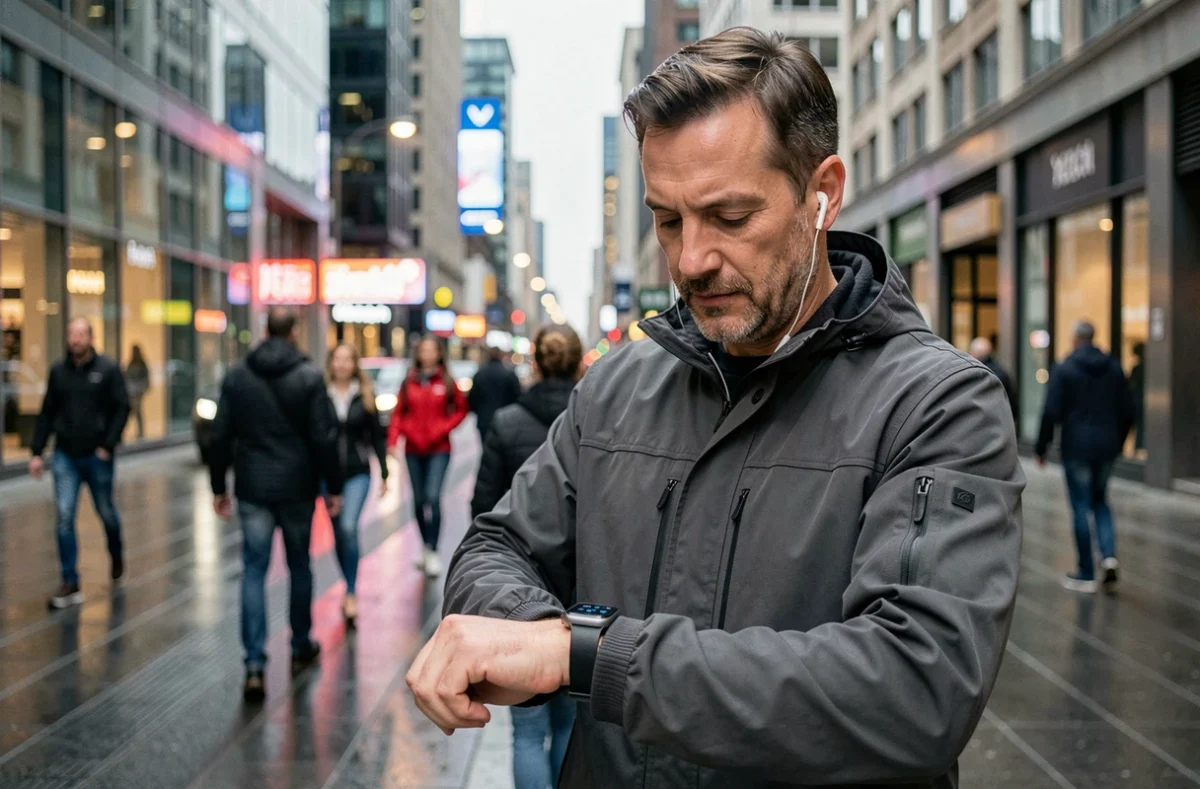
Your phone offers to summarize a long message thread before you even open it. Your smartwatch detects an unusual heart rate and books a doctor’s appointment. These scenarios, still theoretical two years ago, are part of everyday digital life in 2025. This year’s high-tech innovations aren’t limited to spectacular announcements at trade shows: they’re changing the way we work, shop and protect our personal data.
European AI regulation: what’s changing for users in 2025
Before we get to new gadgets, a legal framework is already transforming the digital experience for Europeans. The AI Act, the European Union’s regulation on artificial intelligence, has entered its implementation phase. Since February 2, 2025, certain AI practices have been prohibited in the EU.
In practical terms, systems that manipulate users’ behavior through subliminal techniques or exploit vulnerabilities related to age or disability can no longer be deployed. For consumers, this means that AI applications must comply with verifiable safeguards.
The next milestone arrives on August 2, 2025. Providers of general-purpose AI models—the engines behind chatbots, image-generation tools and voice assistants—will have to meet new transparency requirements. The technologies you use every day, from online search to automatic photo editing, will be covered by rules that didn’t exist a year ago.
Have you noticed that an online service now tells you when content was generated by AI? That’s one of the first visible effects of this regulation. To keep up with these developments and their impact on the products you use, The Web Brains’ high-tech section regularly explores the practical implications of these changes.
Everyday agentic AI: when software acts on your behalf
The term “agentic AI” refers to programs that can carry out complex tasks autonomously, without requiring you to supervise every step. The idea is simple: instead of asking an assistant a question and handling the response yourself, you give it a goal. It figures out how to achieve it.
Here’s a practical example. You’re looking for a flight to Lisbon, a hotel near the city center and a gluten-free restaurant for your first evening. An AI agent receives this single request, searches multiple platforms, compares prices, checks availability and suggests a complete itinerary. You approve or adjust it, but the tedious research is delegated to the machine.
The current limitations of AI agents
This autonomy comes with risks. An agent that books a flight charges your credit card. A misunderstanding could be costly. That’s why multi-agent architectures, in which several programs check one another’s work, are becoming a governance issue for businesses.
For individuals, caution is still essential: always review an AI agent’s final actions before approving them. Current systems are better suited to repetitive tasks (sorting emails, scheduling meetings) than to decisions with significant financial consequences.
Smartphone sustainability: new European eco-design rules
Since June 2025, smartphones and tablets sold in the European Union have been subject to eco-design and energy-labeling requirements. In practice, this is similar to what you’re used to seeing on a refrigerator or washing machine: a label showing the device’s estimated lifespan, repairability and energy efficiency.
Why does this change matter? Because it affects how you compare products when making a purchase. Until now, most consumers chose a phone based on screen size, camera quality or price. Now, lifespan and repairability are becoming visible factors when choosing a device in store.
- Manufacturers must guarantee the availability of spare parts for a minimum period, making repairs outside the official service network easier.
- The energy label provides information about battery consumption under standardized conditions, allowing you to compare two models on an equal basis.
- Software updates must be provided for a specified period, reducing software obsolescence, which often leads people to replace devices that still work.
This European framework is encouraging manufacturers to design longer-lasting devices. For consumers, it’s a practical way to push back against the rapid replacement of electronics.

Cybersecurity for consumers: threats targeting individuals in 2025
Digital innovations also create new attack surfaces. AI-generated phishing attempts have become harder to spot. Fraudulent emails written by a language model no longer contain the glaring mistakes that once served as a warning sign.
Audio deepfakes are an emerging threat. A phone call can convincingly imitate the voice of a loved one or bank representative. Verifying the request through a second channel is still the best defense: if a call seems suspicious, hang up and call the official number back.
Simple ways to protect yourself
- Enable two-factor authentication on all your sensitive accounts (banking, email, social media). This measure blocks the vast majority of unauthorized access attempts.
- Update your devices as soon as an update is available. Security patches fix vulnerabilities that are being actively exploited.
- Be wary of urgent messages asking you to transfer money or click immediately, even if they appear to come from a familiar source.
The technologies of 2025 offer real gains in convenience and efficiency. They also bring new responsibilities, both for providers subject to regulation and for users adopting these tools. Every useful innovation calls for an appropriate degree of vigilance—without paranoia, but without naivety either.