
Lavender has long been associated with protection against pests. Its volatile compounds, linalool and linalyl acetate, are detected from a distance by many arthropods and some mammals. Their reaction varies depending on the species, the concentration of the olfactory signal, and the form in which lavender is used. Distinguishing between proven repulsion and persistent belief requires examining the available data species by species.
Linalool and linalyl acetate: the mechanism behind repulsion
Linalool and linalyl acetate make up the majority of the aromatic compounds in true lavender (Lavandula angustifolia). These two molecules act on the olfactory receptors of insects, particularly mosquitoes, whose CO₂ and body odor detection systems are disrupted. The insect loses its ability to locate the host.
The intensity of repulsion varies depending on the form used. A blooming lavender plant emits its compounds within a limited radius. Concentrated essential oil, applied to the skin or sprayed, delivers a much higher dose of linalool per square centimeter. Specialized guides, such as the one from Naturellement Bio, specify that the repellent effect is significantly stronger with concentrated essential oil than with the plant alone.
For a deeper understanding of the biology of this interaction, a comprehensive file can be found on insects and lavender on ARTS Constructions.
Mosquitoes, moths, and fleas: the insects truly bothered by lavender

Not all insects react the same way. Three categories emerge quite clearly from field reports and published observations.
Mosquitoes
Mosquitoes top the list. Their extremely sensitive olfactory system detects linalool as a disruptive signal.
A potted or massed plant is not enough to keep them away from a terrace. However, applying lavender essential oil to the skin or using concentrated diffusion reduces their tracking ability. The plant alone is not sufficient against mosquitoes; it is the concentration of active molecules that makes the difference.
Clothing moths and food moths
Sachets of dried lavender placed in wardrobes and closets represent a well-documented traditional use. According to a synthesis published by Pleine Vie in 2024, true lavender repels textile moths and food moths. The mechanism relies on the olfactory saturation of the enclosed environment: in a drawer or closed closet, the concentration of linalool remains high enough to maintain the repellent effect for several weeks.
Fleas
The same article from Pleine Vie mentions fleas among the repelled insects. Placing dried lavender near pet bedding helps limit their presence. The available data do not allow for a conclusion of total elimination, but the deterrent effect is documented.
- Mosquitoes: repulsion through olfactory disruption, effective mainly in the form of concentrated essential oil
- Textile and food moths: repulsion in enclosed spaces (sachets in closets), prolonged effect over several weeks
- Fleas: deterrent effect near bedding areas, complementary to conventional treatments
Ticks: a repulsion avenue yet to be confirmed
An article by Marie France published in 2024, dedicated to ticks in the garden, cites true lavender among the plants whose scent is considered “very disturbing” for ticks of the Ixodes genus. The proposed recommendation is to create a “dry belt” of lavender around passage areas (lawn edges, terrace borders).
Field reports diverge on this point. A plant belt does not guarantee an airtight barrier, as ticks primarily move by attaching to a passing host (rodent, deer, dog) rather than crawling long distances through a fragrant mass. The idea remains relevant as a complementary measure in a garden, but not as a sole protection.
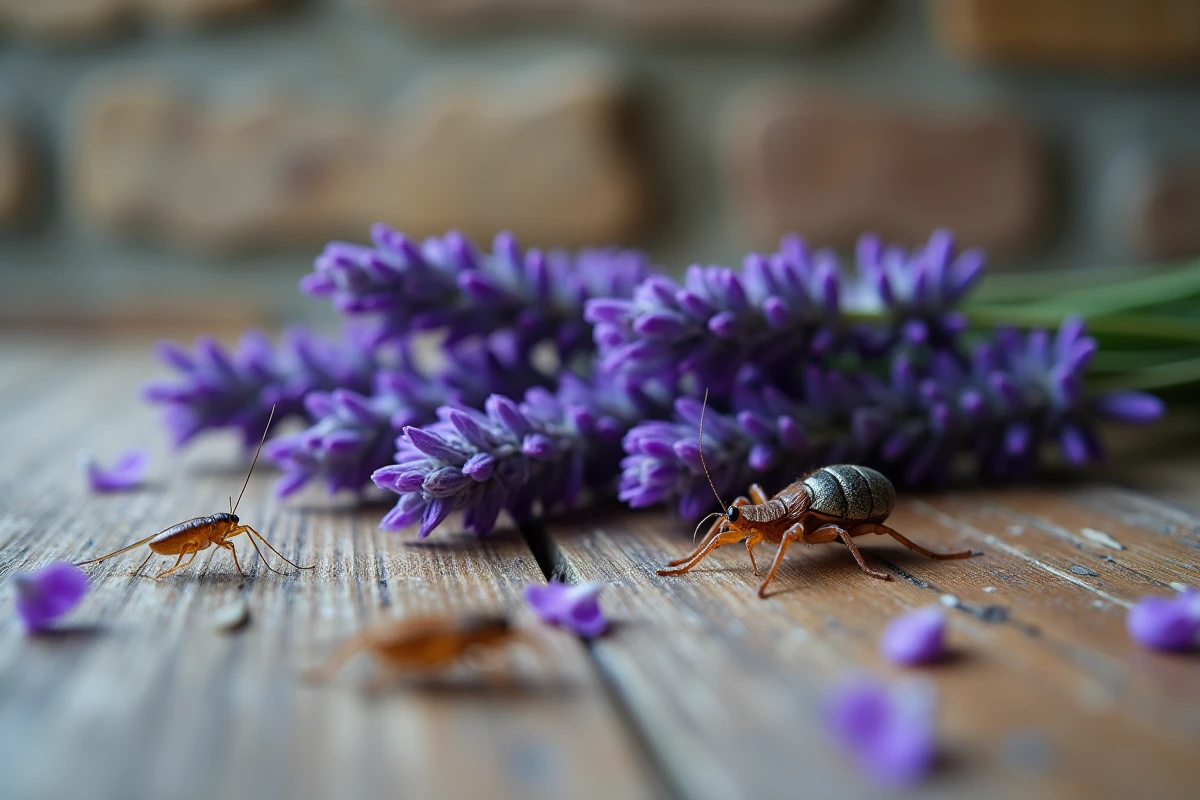
Cats, dogs, and mammals sensitive to the scent of lavender
Repulsion is not limited to arthropods. Several domestic mammals show a clear avoidance of lavender.
Advice published by Agitateur Floral indicates that a few drops of lavender essential oil on a cotton ball, placed near indoor plant pots, act as an olfactory repellent against certain cats and dogs that scratch or chew on the plants. The precaution noted: avoid any direct contact with the animal, even though the doses used in diffusion are not considered toxic.
Cats are particularly sensitive to essential oils due to their hepatic metabolism, which poorly degrades certain compounds. Use should remain limited to ambient diffusion, never applied to the fur.
- Cats: marked avoidance of lavender, hepatic sensitivity to concentrated essential oils
- Dogs: documented olfactory repulsion, useful for protecting indoor plants
- Garden rodents: some gardening guides mention a deterrent effect on voles and field mice, but data remains limited
Lavender in the garden: combining the right plants to enhance the effect
Lavender alone does not constitute a universal barrier. Gardeners seeking to limit pests without chemicals often combine it with other plants that have highly aromatic foliage or flowers: mint, basil, lemongrass, rosemary. Each plant targets different species, and the combination broadens the spectrum of repulsion.
Placing lavender at the edge of a vegetable garden partially protects against aphids while attracting pollinators (bees, bumblebees, hoverflies). This dual role, repelling certain insects while attracting others, deserves consideration before deciding on the placement of the plants.
Lavender effectively repels several species of insects and disrupts some mammals, but its effectiveness always depends on the concentration of active molecules and the context of use. A sachet in a closed closet works better than a mass in open wind. An essential oil applied to the skin offers better protection than a pot on the terrace. Keeping this distinction in mind helps avoid disappointments.