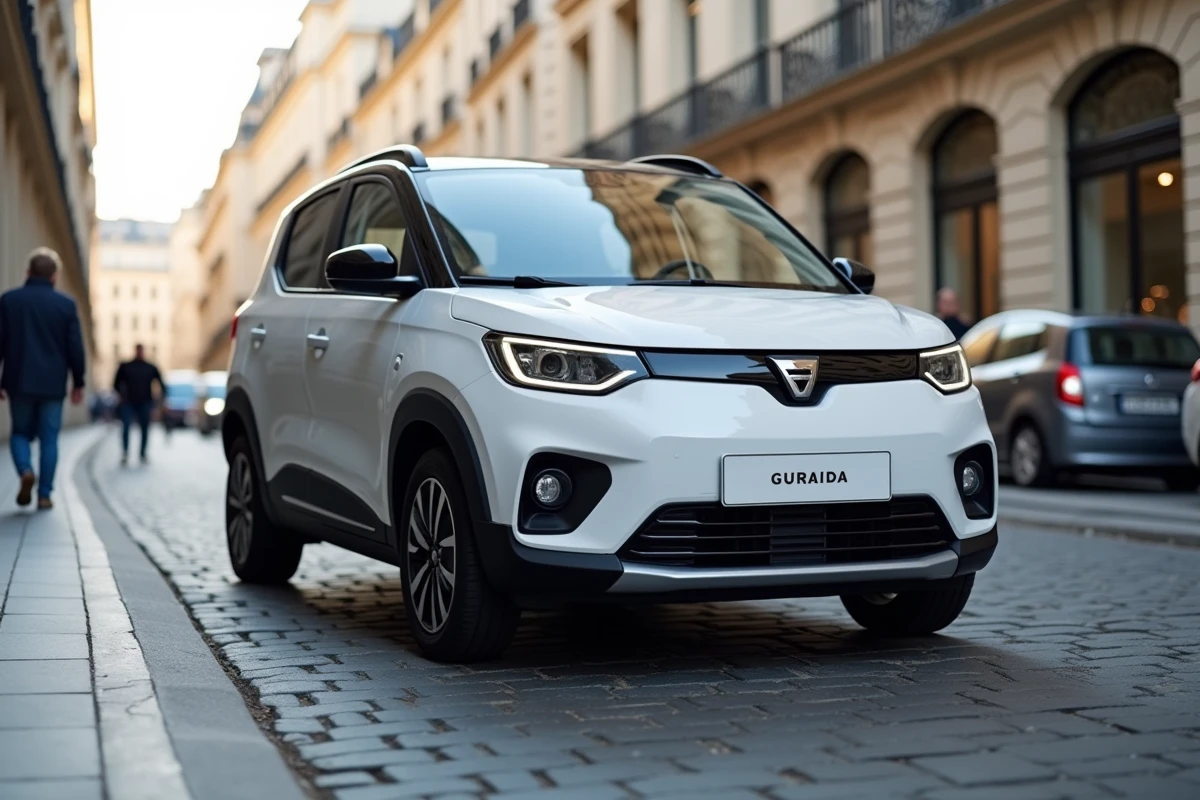
When a manufacturer announces a new car at a rock-bottom price, the instinct is to check what’s under the hood. The Dacia Towny has made headlines as the cheapest city car on the European market. However, between the initial project and industrial reality, the journey of this model deserves careful attention.
Dacia Towny: a project that never reached dealerships
Before discussing performance or comfort, one point needs to be made clear. The Dacia Towny was never marketed. The project, mentioned as early as 2012 by several specialized media, aimed to produce a five-door, five-seat city car at a rock-bottom price. The name “Towny” circulated as a provisional title, and no official confirmation has come from the Renault group.
Why this silence? Because regulatory constraints have profoundly changed the landscape. The introduction of Euro 6d standards, followed by preparations for Euro 7, has driven up the development costs of any new vehicle approved in Europe. Adding ESP, mandatory driving aids, and meeting crash-test requirements makes a rock-bottom price simply unrealistic for a new model sold on the European market.
Online competitors, however, continue to mention the Towny as an imminent launch. For those looking for a Dacia Towny review on Auto World, the observation is the same: the model does not appear in any recent manufacturer catalog.
Safety standards and production costs: why a rock-bottom city car is no longer feasible
Have you noticed that entry-level cars cost significantly more than they did ten years ago? This is not by chance. Each new European standard adds mandatory equipment to the vehicle.
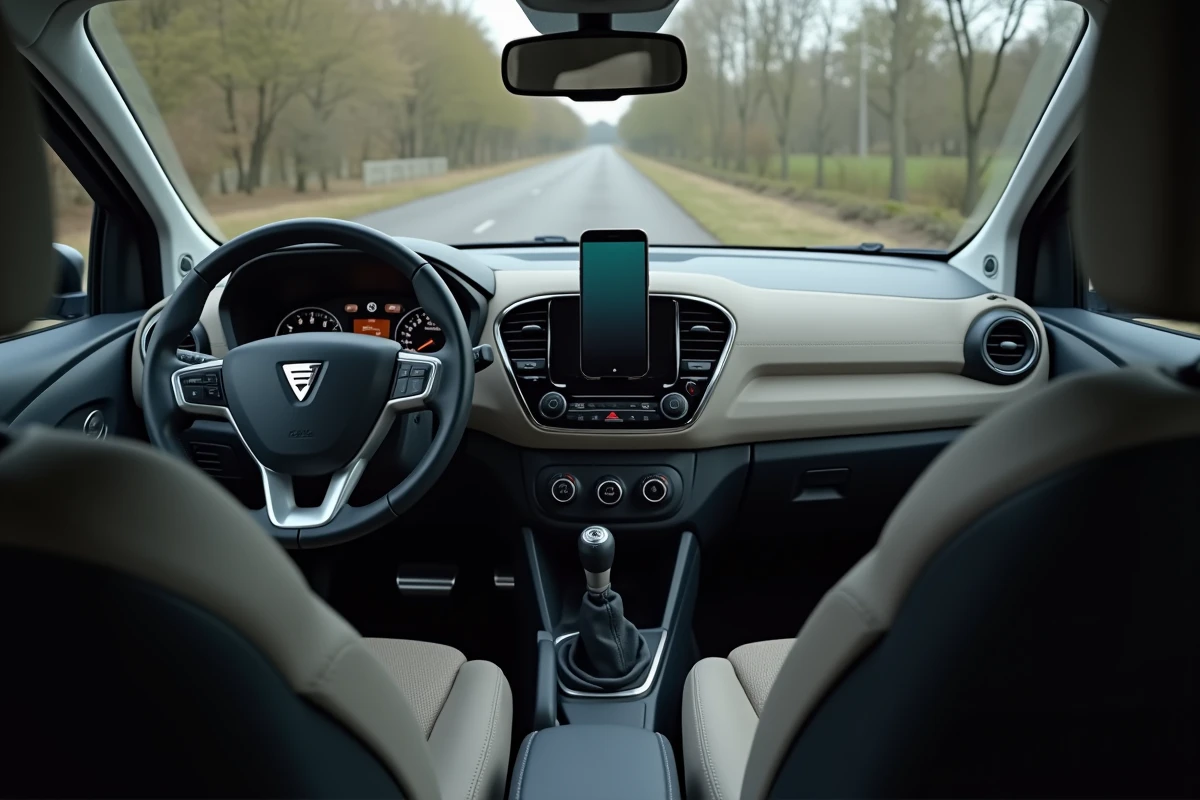
Let’s take a simple example. ESP (electronic stability program) has become mandatory on all new vehicles sold in Europe. This device, which automatically corrects the trajectory in case of loss of grip, represents a unit cost that the manufacturer must incorporate. Multiply this reasoning by a dozen mandatory safety devices, and the rock-bottom price of the vehicle mechanically rises.
The impossible equation of ultra-low-cost European cars
Producing a new car approved in Europe at an extremely low price has become technically unfeasible. Manufacturers targeting the budget segment must balance three factors:
- Mandatory active and passive safety equipment imposed by European regulations, which represent an increasing share of the total vehicle cost
- Emission standards (gradual transition to Euro 7), which require more efficient pollution control systems, even for small engines
- Crash-test requirements (Euro NCAP), which condition brand image and distribution in certain European countries
Dacia has understood this and has made a strategic choice different from what the Towny project announced.
Sandero and Spring: how Dacia responded differently to urban needs
Rather than launching an ultra-budget city car, Dacia has repositioned its entire range around one principle: the best equipment-to-price ratio on the market, without sacrificing compliance. The third-generation Sandero and the electric Spring now occupy the niche that the Towny was supposed to address.
The Sandero offers a compact size suitable for the city, with a level of equipment that would have seemed luxurious on the Towny as it was envisioned. The Spring, on the other hand, directly targets urban electric mobility at one of the lowest prices in the segment.
A brand shift, not just a simple replacement
This repositioning goes beyond a mere model change. Dacia has shifted from an “extreme low-cost” logic to a “value for money” logic. The difference is subtle but concrete: instead of cutting everything to lower the price, the Romanian brand offers well-equipped vehicles at a price lower than direct competitors.
The Jogger illustrates this approach well. A versatile family vehicle, available in hybrid powertrain, at a price that remains significantly below equivalents from French or Korean generalists. The Towny, with its promise of ultra-frugality, no longer aligned with this direction.

Buying a Dacia city car today: the real criteria for choice
If you were interested in the Towny for its urban and economical positioning, here’s what really matters in choosing a Dacia city car right now.
- The total cost of ownership (purchase, insurance, maintenance, fuel consumption) over time, not just the listed price in the dealership
- Compatibility with your actual usage: short daily trips in the city, or mixed city-highway needs that would steer you towards the Sandero rather than the Spring
- The availability of parts and after-sales network, a historical advantage of Dacia thanks to its backing by the Renault network
- Purchase incentives for electric vehicles, which can significantly reduce the entry price of the Spring
The choice between Spring and Sandero primarily depends on the length of your daily trips. For strictly urban use with accessible charging stations, the Spring meets the requirements. For more varied travel, the Sandero remains the versatile choice in the range.
The Dacia Towny will remain a project that well illustrates the evolution of the European automotive market. Regulatory constraints have rendered the idea of an ultra-cheap new car obsolete, but they have also pushed Dacia to offer better-finished and safer models. For those looking for an economical city car today, the current range from the Romanian manufacturer offers concrete solutions that the Towny likely could not have delivered.